
Romanian citizenship applications are approved by the President of the National Authority for Citizenship. This official signs a formal order that grants or restores citizenship. The decision rests on a report from the Citizenship Commission, which is the group that actually reviews your file, checks the paperwork, and runs the interview. So two bodies are involved: the Commission recommends, and the President approves.
That split trips up a lot of people. The Ministry of Justice sits above the whole system, and the Minister of Justice appears at the oath ceremony, but the Minister does not sign individual approvals. Below, you will see exactly who does what, how a file moves from submission to a signed order, and how long each stage tends to take.
The short answer: who signs your approval
The person who approves your application is the head of the National Authority for Citizenship (in Romanian, Autoritatea Națională pentru Cetățenie, often shortened to ANC). By law, citizenship is granted or reacquired through an order issued by the President of this Authority, acting on proposals made by the Citizenship Commission.
The President holds the rank of Secretary of State and is appointed by the Prime Minister for a four-year term. When the office is vacant, a vice-president can step in and carry out the President’s duties, which is what happened during 2025 and 2026 after a change at the top. The title matters more than the name here: whoever holds the office is the one who signs.
Key point: the Citizenship Commission decides whether you meet the conditions, but the President of the National Authority for Citizenship signs the order that makes you a citizen.
What is the National Authority for Citizenship?
The National Authority for Citizenship is a public institution that handles everything to do with Romanian citizenship. It was set up in 2010 and works under the Ministry of Justice. It has its own legal identity and its own budget, and it runs the legal process for granting, restoring, renouncing, and withdrawing citizenship.

In plain terms, this is the one office in Romania that owns the citizenship decision. You submit your file to it, whether in person at one of its offices or through a Romanian consulate abroad, and it is the ANC that processes the case from start to finish. Its official website, cetatenie.just.ro, is where orders for approved files and oath schedules are published.
The Authority has an administrative side, made up of directorates and territorial offices, and a decision-making side, which is the Commission. Keeping those two parts separate is the key to understanding who approves what.
The role of the Citizenship Commission
The Citizenship Commission is the body inside the Authority that does the actual review. It has no separate legal identity of its own; it works as a standing panel within the ANC. Its job is to check whether an applicant meets every condition the law sets out.
The Commission is made up of a president and 20 members, all of them staff of the Authority. The Minister of Justice appoints these members and the Commission’s president for two-year terms, and can remove them during that time. Its sessions are not open to the public, and it can meet with at least three members present.
When the Commission reviews a file, it can do several things: ask you to add missing documents, request information about you from other authorities, and call you in for an interview. If everything checks out, it writes a report stating that the legal conditions for citizenship are met. That report is the recommendation the President then acts on.
Who does what: the approval chain at a glance
Several offices touch a citizenship file, but only one signs the approval. Here is how the roles divide up.
| Body or person | Role in the decision |
| Citizenship Commission | Checks that legal conditions are met, runs the interview, and writes a report recommending approval or rejection. |
| President of the ANC | Signs the order that grants or restores citizenship, based on the Commission’s report. This is the approval. |
| Minister of Justice | Appoints the Commission members and hears the oath of allegiance. Does not sign individual approvals. |
| Ministry of Foreign Affairs | Confirms eligibility for certain special cases, such as Article 8¹ cultural contribution files. |
| Prime Minister | Appoints and removes the ANC President. Not involved in individual files. |
Read the table top to bottom and the logic is simple. The Commission is the engine room, the President is the signature, and the Minister of Justice sets the rules and runs the ceremony. Foreign Affairs only enters for special cases, and the Prime Minister only appoints the person at the top.
The path to approval, step by step
Here is how a standard application moves from the day you file it to the day it is approved.
- Submit your file. You lodge your application and documents with the National Authority for Citizenship, either at one of its offices in Romania or through a Romanian consulate. Files are booked through an online appointment system.
- Registration and checks begin. The Authority registers your file and starts verifying it. It can ask other institutions, such as the police, to confirm details like your criminal record.
- Requests for more documents. If something is missing, the Commission’s president can ask you to complete the file. If you do not supply the documents within the time allowed, the application can be dismissed.
- The interview. Most applicants attend an interview in Romanian. It tests your command of the language and your knowledge of Romanian history, geography, culture, and the Constitution. Passing it is mandatory for naturalisation files.
- The Commission’s report. If you pass and the file is complete, the Commission draws up a report stating the legal conditions are met and recommending approval.
- The President signs the order. Acting on that report, the President of the Authority issues the order granting or restoring citizenship. This is the approval. The order is published on the ANC website.
- The oath of allegiance. You take the oath within three months of being notified. Only then does citizenship legally take effect.
For some cases the chain adds a step. Files based on Article 8¹, which cover people who have made a major contribution to Romanian culture, must first have their eligibility confirmed by the Ministry of Foreign Affairs before the usual review runs its course.
Why the President’s signature is the decision
It helps to be precise about what “approval” means. The Commission can find that you meet every condition, but that finding is a recommendation, not a grant. Citizenship is granted only when the President of the Authority signs the order. The President is the legal decision-maker named in the law for this exact act.
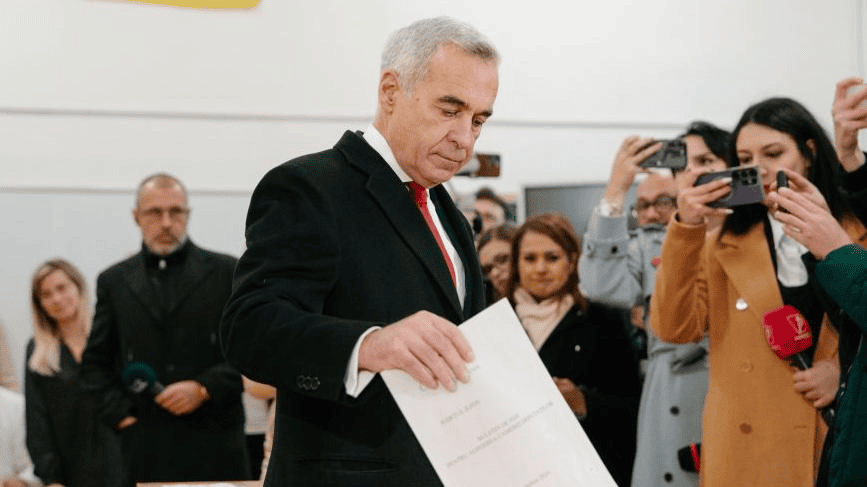
Once the conditions are found to be met and the report is ready, the President issues the order to grant or restore citizenship within a short deadline set by law. In practice, then, your file needs two green lights in sequence: the Commission’s report saying you qualify, and the President’s signature turning that into an order.
One more detail matters. Being approved on paper is not the same as being a citizen. The order sets everything in motion, but you become a Romanian citizen on the day you take the oath of allegiance, not the day the order is signed.
How long does approval take?
Approval is not quick, and the wait depends heavily on which legal route your file uses. The Authority publishes average processing times, and as of early 2026 the picture looked like this.
- Article 8 naturalisation (granting): around 2 years and 7 months on average.
- Article 8¹ (special contribution): around 1 year and 3 months.
- Article 10 (reacquisition): around 2 years and 10 months.
- Article 11 (reacquisition): around 3 years and 10 months.
- Minors (reacquisition): around 2 years and 5 months.
These are averages, not promises, and they shift as the backlog changes. If your file sits past the legal deadline for a decision, you have the right to ask a court to order the Authority to resolve it. You can track your own file’s status through the Stadiu Dosar (File Status) section on the ANC website.
What happens after your file is approved
Once the President signs the order, a few things follow in order.
- Notification. You are told your application has been approved, and the order appears on the Authority’s public list.
- The oath ceremony. Within three months, you take the oath of allegiance to Romania. It is administered before the Minister of Justice and the President of the Authority, or their deputies, and can take place in Bucharest or at a consulate abroad.
- Your certificate. After the oath, you receive your citizenship certificate. Citizenship takes legal effect from the moment you swear the oath.
- Identity documents. With the certificate, you can apply for a Romanian ID card and passport. Since every Romanian is also an EU citizen, that passport carries the right to live and work across the European Union.
Miss the oath window without good reason and the approval can lapse, so treat that three-month deadline as firm.
Frequently asked questions
Does the Minister of Justice approve citizenship applications?
No. The Minister of Justice oversees the system, appoints the Commission members, and hears the oath, but does not sign individual approvals. The President of the National Authority for Citizenship signs the order that grants citizenship.
What is the difference between the Commission and the President?
The Citizenship Commission reviews your file, runs the interview, and recommends approval or rejection in a report. The President of the Authority then issues the order that legally grants citizenship. The Commission recommends; the President approves.
When do I officially become a Romanian citizen?
On the day you take the oath of allegiance, not the day the order is signed. You must take the oath within three months of being notified that your application was approved, or the approval can lapse.
Can a citizenship decision be challenged or forced?
Yes. If the Authority does not decide within the legal deadline, you can ask a court to order it to resolve your file. Rejections and delays can be contested through Romania’s administrative courts.
Where can I check if my application was approved?
On the National Authority for Citizenship website, cetatenie.just.ro. It publishes the list of orders for approved files and the oath schedules, and its File Status section lets you follow your own case.
Conclusion
To approve your citizenship, one office signs: the President of the National Authority for Citizenship, acting on a report from the Citizenship Commission. The Commission checks your file and interview and recommends; the President turns that into an order. A good result is a signed order followed by your oath within three months, since that oath is the moment you legally become a citizen. Track your file on the ANC site and keep your documents current while you wait.
Recommedned Articles: