Business in Dubai is not just about sales and expenses. There is a financial record for every transaction. When properly managed, these records can be highly helpful in monitoring cash flow, completing tax returns, minimising spending, and making smarter company choices.
And this is more true than ever in 2026. UAE Corporate Tax is in full effect, VAT enforcement is becoming data-driven, and the national e-invoicing system is approaching fast. The Federal Tax Authority (FTA) expects that every number in your return is backed by a document that you can supply upon request. The businesses that see accounting as a year-end duty are the ones who face penalties that they may have avoided.
Below, we walk you through it step by step, what the law requires in 2026, and how to build a system that actually holds up.
Why Financial Record Organization Matters in Dubai
Many business owners treat bookkeeping as something to “fix later.” In the UAE’s current tax environment, that habit is expensive. Here’s why well-kept records matter:

- Audit readiness: FTA reviews come with short deadlines. Organised files let you respond in hours, not weeks.
- Full VAT recovery: You can only recover input VAT if you have proof of it with a compliant tax invoice. No receipt, no return.
- Confidence of banks and investors: Many banks, investors and visa authorities demand clean financials.
- Better decisions: When your records are structured, you’ll know where your cash is going, which services are profitable and where costs are leaking.
How Long Must You Keep Records in the UAE?
Here are the actual rules:
- Corporate Tax records: At least seven years after the end of the relevant Tax Period
- VAT records and tax invoices: A minimum of five years
- Certain real estate records: Up to fifteen years
- Accounting books (Commercial Companies Law): At least five years
HA Group tip: keep everything for seven years. One rule is far easier to manage than three, and the storage costs nothing next to a disallowed deduction.
“Records” means much more than invoicing, too. The FTA wants the whole paper trail behind every statistic you submit, including:
- Credit notes, ledgers and tax invoices.
- Contracts, Agreements.
- Bank statements and reconciliations.
- Payroll and WPS documents.
- Import & export documents.
- Asset register and depreciation schedule.
- The working papers behind every return you file.
The concept is simple: If a number is in your return, then there must be something in your files to support it.
Missing records have actual cost. Penalties begin at AED 10,000 and climb to AED 20,000 for a repeat failure. But the biggest damage is indirect—the disallowance of costs you can’t explain, which drives up your taxable income and your tax bill.
Finally, note the audit threshold. All Qualifying Free Zone Persons and businesses with sales above AED 50 million are required to have audited financial accounts. There is no audit requirement below that level, but accounts produced following IFRS still make audits, bank applications and investor due diligence much simpler.
The 2026 Change You Cannot Ignore: UAE E-Invoicing
The UAE is moving to a national e-invoicing system in phases:
- 1 July 2026: Voluntary pilot phase opened.
- 30 October 2026 : Businesses with revenue of AED 50 million or more must appoint an Accredited Service Provider (ASP).
- 1 January 2027: Mandatory issuing and receiving for those large businesses.
- 1 July 2027: Mandatory for businesses below AED 50 million.
- 1 October 2027: Mandatory for government entities.
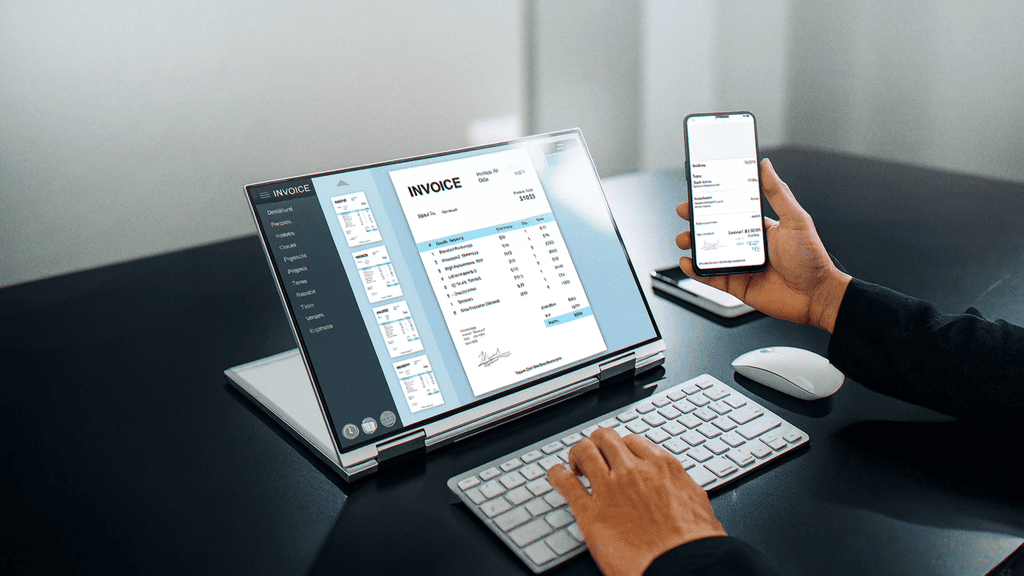
An e-invoice is defined by the FTA as a structured data set sent electronically, not a PDF, a scan or an email attachment; its scope encompasses enterprises regardless of VAT registration, with certain restrictions.
For e-invoicing to work, the fundamental data has to be clean. Missing TRNs, expired trade licensing data, and duplicate customer entries are all causes of rejected invoices. So get organised now, and the transition will be smooth.
Step-by-Step: How to Organize Your Financial Records
Separate Business and Personal Finances
This is the first and most important step. Open a separate corporate bank account and conduct all business through it. The combination of personal and business expenses results in confusion, a weakened tax position, and a rise in red flags during audits.
Choose Reliable Accounting Software
Cloud accounting software is now the standard in Dubai. Look for a platform that is:
- FTA-accredited or compatible with UAE VAT returns
- E-invoicing ready for the upcoming mandate
- Connect directly to your bank feeds
- Real-time accessibility to your accountant
Good software means less manual input, fewer mistakes and everything in one spot.
Build a Clear Chart of Accounts
Group transactions should be organised under clear categories, e.g., income, direct expenses, salaries, rent, utilities, professional fees. Related party transactions should be kept separate because Corporate Tax requires you to follow the arm’s length principle.
Create a Logical Document Filing System
Every transaction requires proof. Place papers into folders like this:
- Sales: tax invoices, credit notes, agreements
- Purchases: Supplier invoices, receipts, purchase orders
- Banking: monthly bank statements and reconciliations
- Payroll: WPS files, wage slips, employment contracts
- Assets: purchase invoices, depreciation plans
- Tax: VAT returns, Corporate Tax submissions, and FTA communication
Use a basic naming convention such as Year-Month-Supplier-InvoiceNumber. Your staff should be able to find a document in seconds.
Record transactions every week, not every year
Weekly entries to flag up unpaid bills, supplier balances, duplicate payments, and missing paperwork since these are easy to resolve. At year-end, you’re reconstructing a year’s worth of transactions, so any errors are baked into a filed return.

Keep complete invoices and receipts
Scan receipts and invoices the day they are received and keep them in safe cloud storage with backups. Digital documents are simpler to retrieve and less likely to be lost during an FTA review. Ensure that all tax invoices include the TRN, the right VAT treatment and all the required data. Any missing information in an invoice might cost you input VAT recovery.
Reconcile bank accounts monthly
Compare all bank statements, deposits, withdrawals, transfers, charges to your records. Monthly reconciliation ensures the accuracy of your reported cash balance and prevents errors from becoming penalties.
Maintain an asset and liability register
Keep track of the times you bought, paid for, depreciated, and got rid of tools, cars, and machinery, plus loans, leases, and supplier balances. Not only should the business’s income be recorded, but also what it owns and owes.
Review Everything Before You File
Before submitting any VAT or Corporate Tax return make sure revenue is complete, expenditures are justified, banks are reconciled and tax codes are correct. Corporation Tax returns are usually due nine months following the end of the Tax Period.
Common Record-Keeping Mistakes in Dubai
- Receipts kept in a drawer, a WhatsApp chat, or a glovebox.
- Personal and business expenses sharing the same card.
- Invoices not accompanied by the TRN or other essential VAT information.
- Cash and petty-cash transactions were never documented.
- One staff member understands the books, and nobody else does.
Each is small on its own. Together they turn a two-hour audit response into a two-week scramble.
How HA Group Can Help
Most owners don’t need a lecture on bookkeeping; they need the system built and kept running. HA Group sets up your accounting software and chart of accounts, does your monthly bookkeeping and reconciliations, files your VAT and Corporate Tax returns, makes statements that are ready for audit, and gets your data ready for e-invoicing.
FAQs
How long should I keep business financial records in Dubai?
You need to keep records of Corporate Tax for a minimum of 7 years and records of VAT for a minimum of 5 years.
Can I keep my financial records in digital form only?
Yes . Digital records are acceptable, but must be comprehensive, accurate, secure, and capable of being supplied if requested by the FTA.
Do small businesses need to keep financial records?
Yes. Every business registered for Corporate Tax or VAT must maintain proper records, regardless of size.
What happens if I don’t maintain proper records?
You may face administrative penalties of AED 10,000 for a first violation and AED 20,000 for repeat violations, along with difficulties during audits.
Does e-invoicing apply to my business?
E-invoicing will apply to almost all businesses operating in the UAE. Large businesses start on 1 January 2027, and smaller businesses on 1 July 2027.
Final Words
Organized financial records come down to one idea: every number in your return should be traceable to a document in under a minute. Separate your money, record weekly, reconcile monthly, review before filing, and compliance stops being a crisis. If you’d rather hand it over, HA Group is ready to help.
Recommended Articles:
Exploring the Types of Bookkeeping Services for Businesses in Dubai
Top Accounting Tips for Startups in Dubai (2026 Guide)
Do Small Businesses Need an Accountant in Dubai?
Bookkeeping Best Practices for Small Businesses in Dubai?
Accounting Mistakes Startups Should Avoid in The UAE (2026 Guide)