
Company Liquidation Services in UAE You Can Rely On
From settling liabilities to securing final approvals, our company liquidation services in UAE are designed for businesses that want a smooth and compliant exit. Whether you’re closing a business in Dubai or anywhere across the Emirates, HA Group manages the entire process with precision, ensuring full regulatory compliance at every step.
Company Liquidation Services
Why is Company Liquidation Required in UAE?
You must complete a formal company liquidation in UAE to cancel your trade licence, settle all liabilities, and officially deregister your business. Without following the proper winding-up process, your business may continue to incur government fines, visa restrictions, and ongoing legal liability.
Businesses typically go through company liquidation in Dubai and across the UAE for several reasons:
- Business is no longer operational or profitable
- Trade license expiry or non-renewal
- Strategic exit or restructuring
- Shareholder or partnership disputes
- Financial challenges, insolvency, or accumulated liabilities
- Transition to a new business setup
If company dissolution is not completed properly, authorities may impose penalties, freeze accounts, or flag owners for non-compliance making it significantly harder to obtain new licences or conduct future business activities in the UAE.
Company Liquidation Process in the UAE
The company liquidation process in UAE involves a series of formal steps required to legally close and deregister a company.
Step 1:
Shareholder Resolution to Liquidate
Mandatory local director support for non-resident companies.
The company liquidation process in UAE starts with a formal resolution by shareholders to close the business. This notarised document officially initiates the winding-up procedure in your jurisdiction.
Step 2:
Appointment of Licensed Liquidator
A registered liquidator is appointed to manage the closure process. They review financial records, prepare liquidation reports, and oversee company dissolution in compliance with UAE regulations.
Step 3:
Preparation of Financial Statements
The liquidator prepares final financial statements and a statement of affairs. This step ensures full financial transparency before submitting documents to the relevant authority.
Step 4:
Initial Approval & License Cancellation
The company applies for initial approval from the relevant authority. As part of this process, the trade licence is submitted for cancellation to begin formal closure.
Step 5:
Settlement of Liabilities & Debt Clearance
All outstanding obligations must be settled, including:
- Payments to creditors and suppliers
- Bank account closures
- Employee dues and visa cancellations
Settling all outstanding obligations at this stage is critical to ensuring a clean exit and avoiding any future financial or legal liability.
Step 6:
Clearance from Government Authorities
Clearances (NOCs) are obtained from relevant authorities including immigration, labour departments, and free zone or mainland regulators, ensuring the business closure is fully compliant with UAE regulations.
Step 7:
Public Notice & Creditor Claims Period
A public notice is published typically for a 45-day period announcing the liquidation of your company. This allows creditors to submit any outstanding claims before finalising the deregistration process.
Step 8:
Final Report, Asset Distribution & Deregistration
After all clearances and the notice period, remaining assets are distributed among shareholders. The liquidator submits the final report, and the relevant authority issues the official deregistration certificate confirming the complete and legal dissolution of your company.
Types of Company Liquidation in UAE: Ownership, Process & Jurisdiction
The company liquidation process in UAE varies depending on several key factors — ownership structure, type of liquidation, and jurisdiction of registration, each requiring a different compliance route. Below, we break down the three main factors that shape the closure path for your business.

1. Type of Ownership
Ownership structure determines how the closure process is carried out. For sole establishments and proprietorships, the process is relatively straightforward and is handled through the Department of Economic Development (DED).
As part of the winding-up procedure, the business must cancel its trade licence and obtain mandatory clearances from relevant authorities, including:
- Ministry of Human Resources and Emiratisation
- General Directorate of Residency and Foreigners Affairs (GDRFA)
- Utility providers (water and electricity authorities)
These clearances confirm that all employment, visa, and utility obligations have been fully settled before closure.
2. Type of Liquidation
The closure process is generally classified into two main types based on the company’s financial position and reason for closure.
Voluntary Liquidation
Voluntary liquidation occurs when shareholders or directors decide to close the company without court intervention. It is commonly used when a business is no longer required or is being restructured.
This applies in cases such as:
- Strategic business exit
- Business inactivity or operational closure
- Group restructuring or consolidation
Compared to court-ordered closure, voluntary liquidation gives shareholders greater control and oversight throughout the entire winding-up process.
Compulsory Liquidation
Compulsory liquidation is a court-ordered process initiated when a company is unable to meet its financial obligations. Creditors may file a case to recover outstanding dues, leading to enforced liquidation.
This results in formal company dissolution, where assets are sold to settle liabilities. It typically occurs in situations such as:
- Unpaid debts
- Legal action by creditors
- Financial insolvency
3. Jurisdiction of Registration (Mainland vs Free Zone)
The wind-up process also depends on where the business is registered.
Mainland companies must complete liquidation through the Department of Economic Development (DED), along with required immigration, labour, and utility clearances.
Free Zone companies follow their respective authority’s procedures. While each Free Zone has its own process, all require formal licence cancellation and final deregistration through the relevant Free Zone authority.
Not sure which process applies to your business? Our team can guide you through the complete business closure process step by step.
Legal Framework Governing Liquidation in the UAE
Business closure in the UAE is governed by a structured legal framework designed to ensure transparency, creditor protection, and full regulatory compliance. Whether you’re closing a business in Dubai or anywhere across the Emirates, compliance with both federal laws and local authority regulations is mandatory to complete a valid and legally recognised closure. A properly executed wind-up is not just an administrative step, it is a regulated legal procedure that formally removes a company from the commercial register through approved channels.
Core UAE Laws Regulating Company Liquidation
The legal basis for company liquidation in UAE is defined under key federal legislation that governs company formation, operation, and closure:
Federal Decree-Law No. 32 of 2021 on Commercial Companies
This is the primary law governing all commercial entities in the UAE. It outlines the legal process for winding up a company, appointing a liquidator, settling obligations, and completing formal company dissolution.
Federal Decree-Law No. 51 of 2023 on Financial Reorganisation and Bankruptcy
This law applies to insolvent businesses and governs court-supervised liquidation procedures. It is a key legal reference for compulsory company liquidation in UAE, especially where liabilities exceed assets.
Cabinet Resolution No. 58 of 2020 (as amended by Cabinet Resolution No. 109 of 2023) on Ultimate Beneficial Owner (UBO) Procedures
This regulation ensures transparency of ownership structures before and during the company liquidation process in UAE, requiring accurate disclosure of shareholders and beneficial owners.
Federal Decree-Law No. 47 of 2022 on Corporate Taxation
All corporate tax obligations must be fully settled and final returns filed before completing company liquidation in the UAE, ensuring tax compliance before deregistration.
Mainland UAE Regulations (DED Framework)
For mainland companies, the closure process is regulated by the Department of Economic Development (DED), supported by federal legal requirements.
To complete a legally compliant closure, businesses must:
- Pass a formal shareholder resolution for liquidation
- Appoint a licensed liquidator (where applicable)
- Publish a mandatory creditor notice in approved newspapers
- Settle all outstanding liabilities including creditors, employees, and government dues
- Obtain clearance from MOHRE, immigration, and utility authorities
- Cancel the trade licence and commercial registration
These steps ensure the business is formally removed from the active registry through a compliant company dissolution process.
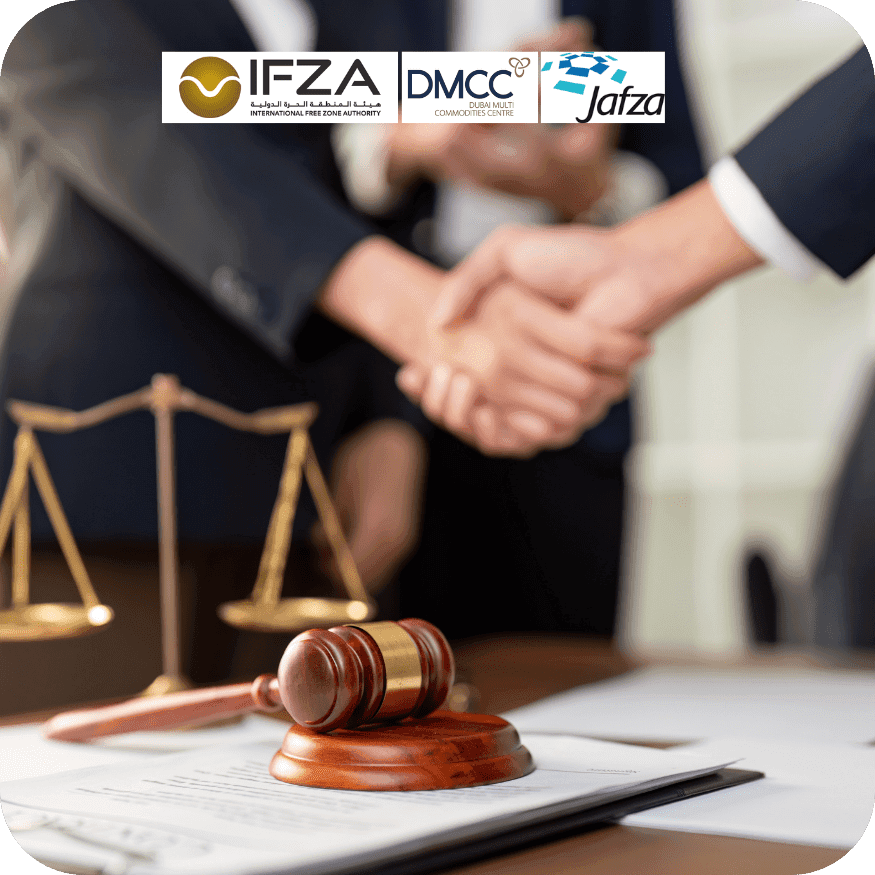
Free Zone Liquidation Regulations
Free Zone entities follow authority-specific procedures under their respective jurisdictions such as DMCC, JAFZA, IFZA, and others, while remaining aligned with UAE federal commercial laws.
The deregistration process in Free Zones typically includes:
- Application for licence cancellation with the Free Zone Authority
- Settlement of employee visas, leases, and outstanding dues
- Clearance from all internal departments
- Submission of final liquidation documents and liquidator report (if required)
- Final deregistration from the Free Zone registry

Creditor Protection and Legal Notice Requirements
A key pillar of the company liquidation process in UAE is creditor protection. UAE law requires companies to issue a public notice in approved newspapers, allowing creditors a statutory period (typically 45 days) to submit any claims.
This ensures all liabilities are properly addressed before finalising the liquidation, protecting creditors and shareholders alike in accordance with UAE legal standards.
- Pass a formal shareholder resolution for liquidation
- Appoint a licensed liquidator (where applicable)
- Publish a mandatory creditor notice in approved newspapers
- Settle all outstanding liabilities including creditors, employees, and government dues
- Obtain clearance from MOHRE, immigration, and utility authorities
- Cancel the trade licence and commercial registration
These steps ensure the business is formally removed from the active registry through a compliant company dissolution process.

Non-Compliance Risks
Failure to follow the legal framework governing company liquidation in UAE can result in significant consequences, including:
- Accumulation of government fines and penalties
- Visa restrictions for shareholders and authorised signatories
- Blocking of future trade licence applications in the UAE
- Ongoing liability for an inactive or unclosed company
- Legal claims from creditors or regulatory authorities
These risks highlight why a properly managed closure process is essential for any business exit.

Importance of a Compliant Liquidation Process
Given the legal complexity and multi-authority coordination involved, most businesses rely on professional company liquidation services in UAE to ensure every step is handled correctly—from documentation and clearances to final deregistration.
A structured and compliant company dissolution in UAE ensures the business is closed cleanly, legally, and without future exposure or operational risk.
Documents Required for Company Liquidation in Dubai
The company liquidation process in UAE requires the submission of specific legal and financial documents to ensure a smooth and compliant closure. Regardless of your jurisdiction, Mainland or Free Zone, proper documentation is essential to avoid delays, penalties, or rejection.
At HA Group, we support businesses in preparing and structuring all required documents as part of our company liquidation services in UAE, ensuring an accurate and fully compliant closure.
Core Documents Required
- Trade licence copy of the company
- Shareholder resolution approving liquidation
- Passport copies of shareholders and authorised signatories
- Emirates ID copies (if applicable)
- Memorandum of Association (MOA) / Articles of Association
- Original company registration certificate
- Tenancy contract / Ejari certificate (required for mainland companies operating from a physical office)
Financial and Accounting Documents
- Latest audited financial statements (if available)
- Bank account closure letters or statements
- VAT registration and deregistration documents (if applicable)
- Corporate tax filings and clearance (if applicable)
- List of outstanding liabilities or creditor statements
Clearance and No Objection Certificates (NOCs)
- Ministry of Human Resources and Emiratisation (MOHRE) clearance
- Immigration and visa cancellation confirmations
- Utility clearance (DEWA or relevant authority)
- Free Zone or DED final clearance (depending on jurisdiction)
Additional Supporting Documents (If Required)
- Proof of public notice publication (creditor announcement)
- Liquidator appointment letter and report
- Power of attorney (if represented by a consultant)
- Asset and liability statements
Why Proper Documentation Matters
Incomplete or incorrect documentation can delay the company liquidation process in Dubai or across the UAE, resulting in penalties, rejections, or prolonged closure timelines. Proper preparation ensures a smooth, efficient, and fully compliant business closure in the UAE.
Why Choose HA Group for Company Liquidation in the UAE
Choosing the right partner for the company liquidation process in UAE plays a key role in speed, compliance, and a smooth exit. At HA Group, we deliver structured company liquidation services across the UAE, designed to simplify every stage of your business closure with full accuracy and regulatory compliance.
End-to-End Support
We manage the complete company liquidation process across Dubai and the UAE from documentation and approvals to final deregistration handling every step in a structured and fully coordinated manner.
Regulatory Expertise
Our team has in-depth knowledge of UAE federal laws and authority-specific regulations across DED, DMCC, JAFZA, IFZA, and other jurisdictions, ensuring your liquidation is executed in full compliance with current legal requirements.
Fast Processing
We streamline the entire business closure workflow to minimise delays and complete most cases within 30 to 60 working days, across both mainland and free zone jurisdictions.
Accurate Documentation
All required documents are carefully prepared and reviewed to reduce errors, prevent rejections, and keep your deregistration process moving without interruption.
Transparent Process
We maintain clear communication at every stage, giving you complete visibility on requirements, progress, and next steps so you always know exactly where your case stands.
Dedicated Assistance
Each case is handled with personalized attention, so your business exit receives focused support and quick responses throughout the entire process.
What Our Clients Say About Us

James Anderson
I used HA Group to close my company in Dubai, and honestly it was more straightforward than I expected. They explained the whole process clearly and handled most of the paperwork and approvals. It saved me a lot of back and forth with different offices.

Sarah Johnson
Good support throughout the process. They explained what needed to be done and guided us step by step. The team was easy to reach and quite helpful whenever we had questions.

Robert Davis
Closing a business here is never simple, but they made the whole closure process feel organised. They took care of coordination with authorities and kept me updated whenever something moved forward. Overall a good experience.

Michael Brown
Very efficient service overall. The team was helpful and kept things moving without unnecessary delays. I appreciated that they were straightforward and didn’t overcomplicate the process.

Laura Mitchell
We had to close our LLC in the UAE, and they managed it properly from start to finish. There were a few steps we didn’t understand, but they guided us through everything and made the process manageable.

David Wilson
Professional and responsive team. They handled everything properly and made the process stress-free. No issues with communication or execution.
Start Your Company Liquidation in UAE Today
Get expert support for your company liquidation process in UAE with HA Group. We manage everything from approvals to final closure, making company liquidation in Dubai smooth and compliant.
Frequently Asked Questions – Company Liquidation in UAE
How long does it usually take to close a company in the UAE?
The timeline depends on the business type, approvals required, and whether all liabilities are settled. On average, the process takes around 30 to 90 days.
Can a business owner handle company liquidation without professional help?
It is possible, but the process involves multiple authorities, legal clearances, and documentation. Many businesses prefer company liquidation services in UAE to avoid delays, rejections, or compliance issues.
What is the difference between liquidation and insolvency?
Liquidation is the formal process of closing a company, while insolvency refers to a financial situation where a business cannot meet its obligations. Insolvent companies may go through court-supervised closure under UAE regulations.
What happens to staff when a company is shut down in Dubai?
During company liquidation in Dubai, employee contracts must be properly terminated. This includes visa cancellation, final salary payment, and settlement of end-of-service benefits according to UAE labour regulations.
What are the typical costs involved in company liquidation in Dubai?
The company liquidation charges in Dubai vary based on company structure, jurisdiction, number of employees, outstanding obligations, and whether audit or liquidator services are required.
Is a liquidator always required for closing a company in the UAE?
Not in all cases. For many Mainland companies, a licensed liquidator is required, especially where formal audits or creditor notices are involved. Free Zone rules may differ depending on the authority.Yes. We provide bank account opening support, including guidance and documentation preparation to improve approval chances.
What risks come with not formally closing a company in the UAE?
If a business is not properly closed, it may continue to accumulate government fines, immigration restrictions, trade licence penalties, and ongoing legal liability for shareholders and owners.
Is it easier to close a Free Zone company compared to a Mainland company?Can I apply for a visa through my Singapore company?
In most cases, yes. Free Zone company liquidation in UAE is usually faster because it is handled under one authority, while Mainland closures involve multiple government departments.
What documents are needed to complete company closure in Dubai?
Typically required documents include the trade licence, shareholder approval, identification copies, company incorporation papers, financial statements, and clearance certificates from relevant authorities.
Can the entire company liquidation process in UAE be managed remotely?
Yes, in many cases the process can be handled remotely through authorised representatives, especially when all documents and approvals are in order. This is common when working with professional liquidation consultants.
Still confuse? no need to worry, just contact us